Dr. Rinki Tiwari – Senior Fertility Consultant


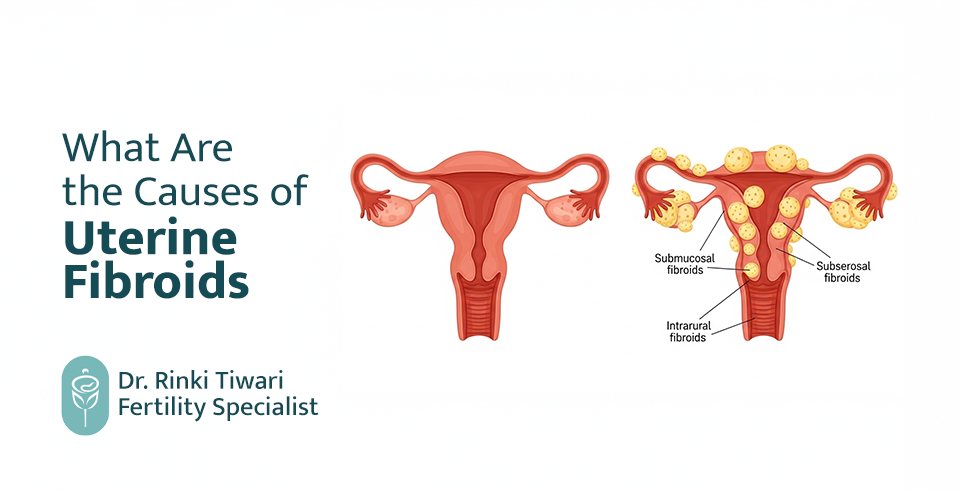
Demystifying Uterine Fibroids: Causes, Fertility Impact, and Treatment Options
Uterine fibroids are the most common benign tumors of the female reproductive system, affecting a significant portion of women. These non-cancerous growths develop within or around the uterus and are composed of muscle and fibrous tissue. Their size can vary dramatically, ranging from undetectable to large enough to distort and enlarge the uterus.
Understanding the potential causes of uterine fibroids is crucial for proper diagnosis, treatment, and even prevention. This guide explores the factors contributing to fibroid development and sheds light on this prevalent gynecological condition.
Unveiling the Causes of Uterine Fibroids
The exact cause of uterine fibroids remains under investigation, but research has identified several contributing factors:
Hormonal Imbalances:
Estrogen and progesterone, the primary female sex hormones, play a key role. These hormones stimulate the growth of the uterine lining during each menstrual cycle. An imbalance or excess of these hormones can trigger the abnormal growth of fibroid tumors.
Genetic Predisposition:
Uterine fibroids often run in families, suggesting a genetic component. If your mother, sister, or grandmother had fibroids, you may be more susceptible. Specific gene variations have been linked to an increased risk.
Early Menstruation:
Women who begin menstruating at a young age (before 10 years old) face a higher risk of developing fibroids later in life. Extended exposure to estrogen and progesterone over the years may contribute to fibroid growth.
Obesity and High Body Mass Index (BMI):
Excess body weight is associated with a higher risk of fibroids. Fat cells produce additional estrogen, which may promote fibroid growth.
Reproductive Factors:
Women who haven’t been pregnant or have had fewer pregnancies may be more likely to develop fibroids. Additionally, certain fertility treatments, like in vitro fertilization (IVF), have been linked to an increased risk.
Symptoms of Uterine Fibroids
Many women with fibroids do not experience symptoms. Around 25% may notice:
- Heavy menstrual bleeding
- Painful periods
- Abdominal or pelvic discomfort
Uterine Fibroids and Fertility: A Complex Relationship
The impact of fibroids on fertility varies based on size, number, and location. Fibroids can:
- Block fallopian tubes, preventing sperm from reaching the egg.
- Interfere with implantation of a fertilized egg in the uterine lining.
- Increase the risk of miscarriage due to a compromised uterine environment.
However, not all women with fibroids experience fertility issues. If you’re concerned about fibroids and your fertility, consulting a qualified healthcare professional is crucial. I, Dr. Rinki Tiwari, can assess your individual situation and recommend the most appropriate course of action.
Treatment Options for Uterine Fibroids
Women in Hyderabad have access to several treatment options, depending on symptoms and individual needs:
Medication:
Hormonal medications or non-steroidal anti-inflammatory drugs (NSAIDs) may help manage symptoms or shrink fibroids. Hormonal therapy can regulate hormone levels, while NSAIDs help alleviate pain.
Uterine Artery Embolization (UAE):
A minimally invasive procedure that blocks the blood supply to fibroids, causing them to shrink. A catheter is inserted into the uterine artery, and embolic materials are used to reduce blood flow to the fibroids.
Myomectomy:
This surgical procedure removes fibroids while preserving the uterus, making it suitable for women who wish to maintain fertility. It can be done laparoscopically (minimally invasive) or via traditional abdominal surgery.
Hysterectomy:
In severe cases, surgical removal of the uterus may be recommended. This option eliminates fibroids but results in infertility and is typically reserved for women with severe symptoms or when other treatments fail.
Seeking Expert Care in Hyderabad
If you’re experiencing symptoms of uterine fibroids or are concerned about your reproductive health, seeking professional advice is vital. I, Dr. Rinki Tiwari, provide comprehensive care for women with uterine fibroids, offering personalized treatment plans tailored to your unique needs.
Why Choose Dr. Rinki. Tiwari for Uterine Fibroid Treatment?
- Comprehensive care: Multidisciplinary approach for complete evaluation and treatment.
- Accurate diagnosis: Advanced tools for precise assessment and targeted treatment.
- Variety of options: Medication, minimally invasive procedures (UAE, laparoscopic myomectomy), and surgery (hysterectomy).
- Fertility preservation: Uterus-preserving options for women planning pregnancy.
- Optimized outcomes: Focus on effective treatment and patient satisfaction.
With early diagnosis and the right treatment plan, you can potentially improve your reproductive health and fertility. My goal is to support you on your journey to optimal well-being.
References:
https://www.ncbi.nlm.nih.gov/pmc/articles/PMC9871264/ https://www.sciencedirect.com/topics/medicine-and-dentistry/uterine-fibroid
- [1] Fertility and Sterility [PUBMED]. “The role of hormones in uterine fibroid growth”.
- [2] Human Reproduction journal [PUBMED]. “Genetic epidemiology of uterine leiomyomas: a systematic review”.
- [3] Fertility and Sterility [PUBMED]. “Age at menarche and uterine leiomyomata”.
- [4] Human Reproduction journal [PUBMED]. “Obesity and uterine leiomyomas: a review of the literature”.
- [5] Fertility and Sterility [PUBMED]. “The environment and uterine leiomyomas”.
- [6] Fertility and Sterility [PUBMED]. “Medical management of uterine leiomyomas”.
- Journal of Vascular and Interventional Radiology (JVIR). “Uterine artery embolization for symptomatic uterine fibroids: a comprehensive review”
- Journal of Minimally Invasive Gynecology
- American College of Obstetricians and Gynecologists [ACOG]
Frequently Asked Questions (FAQs)
Can you get pregnant if you have uterine fibroids?
Yes, you can. During pregnancy, your body releases elevated levels of hormones which support the pregnancy. However, these hormones can also cause fibroids to enlarge. Large fibroids can cause certain complications during pregnancy.
Do fibroids change over time?
Yes, fibroids can change over time in size and symptoms. They can grow slowly or rapidly, or they may stay the same size. Some fibroids even shrink on their own.
Fibroids are most commonly influenced by hormone levels. They tend to shrink after menopause due to the drop in estrogen and progesterone. Conversely, fibroids may grow larger during pregnancy due to the increase in hormones.
Can uterine fibroids cause irregular periods?
In approximately 30% of patients, uterine fibroids cause menorrhagia, or heavy menstrual bleeding, and more than half of the patients experience symptoms such as heavy menstrual bleeding, pelvic pain, or infertility.
What foods to avoid if you have uterine fibroids?
Refined carbohydrates, red meat, processed food and high-fat dairy are some foods you might want to avoid. Research on the exact link between diet and fibroids is ongoing, but focusing on a healthy diet can benefit your overall well-being. Eating green vegetables may protect women from developing fibroids.